

What started with learning, exploration and pest plant removal has grown into something even more visible along the Waiarohia Stream.
Earlier this year, ākonga from Whangārei Boys’ High School spent time removing invasive species including giant reed and wild ginger from a site near their school on the banks of the Waiarohia.
Their mahi helped prepare the area for restoration by creating space for native species to establish and thrive.
In July, that work came full circle.
Over two days, tamariki and taiohi from Whangārei Girls’ High School, Whangārei Intermediate School, Whangārei Primary School and Mairtown Kindergarten returned to the Waiarohia to plant 1,500 native plants across the site the boys had previously cleared.
The planting is part of the ongoing Waiarohia kaupapa, which continues to connect ākonga with the awa through mātauranga Māori, environmental science and hands-on restoration activities.
Throughout the two-day event, ākonga rotated through a series of practical activities designed to deepen their understanding of the catchment and their role as kaitiaki.
Working alongside Mountains to Sea Conservation Trust, students learned correct planting techniques and discovered how native vegetation supports biodiversity, improves waterway health and strengthens the resilience of the stream edge.
While some students were planting, others took part in rubbish collection and waste sorting activities, learning about the impacts of litter on waterways and local ecosystems.
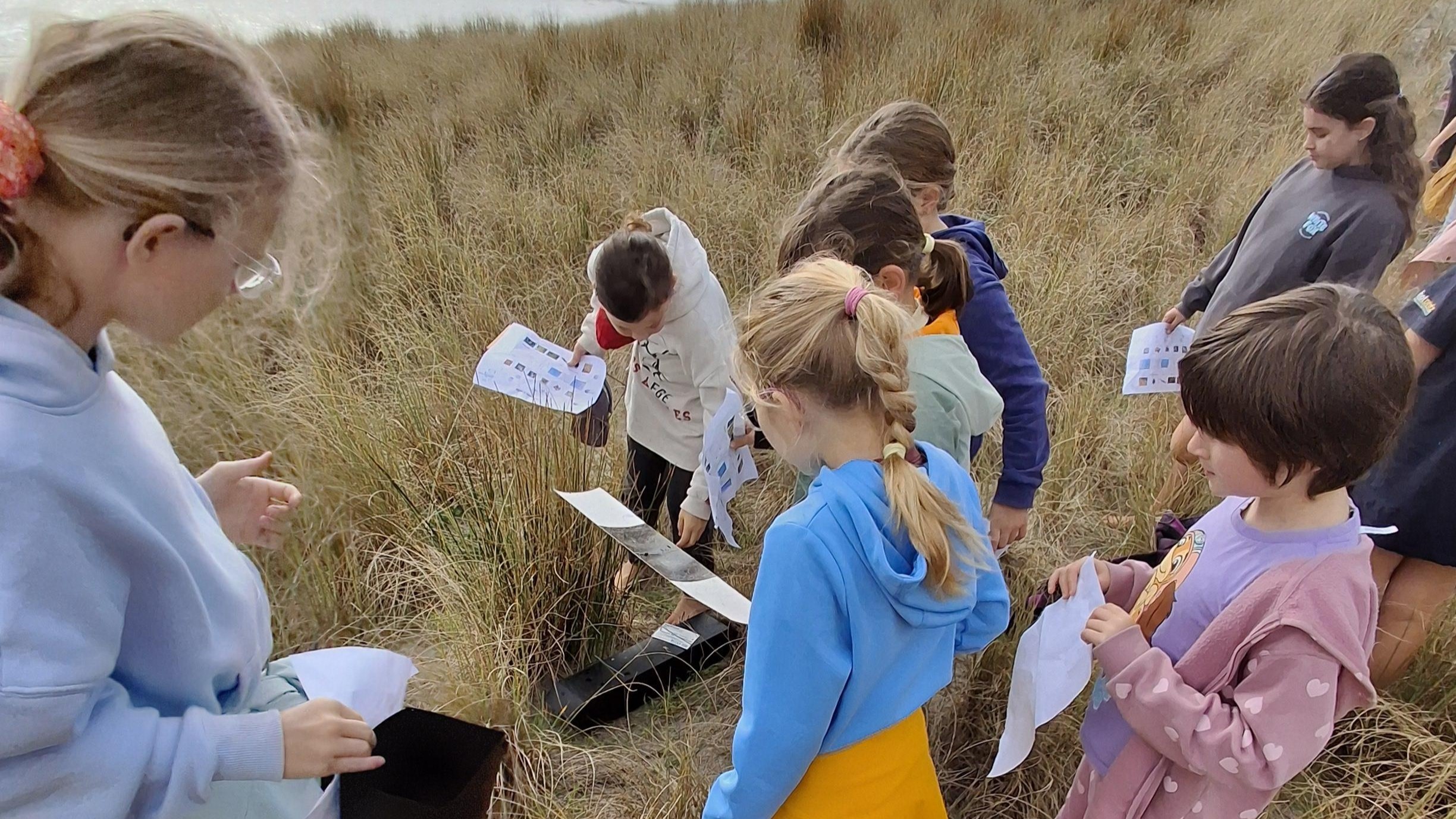
Another group developed skills in identifying native and pest plants, gaining a deeper understanding of the species that support healthy ecosystems and those that threaten them.

Ākonga learn about native and pest plants during a field activity, exploring how different species influence the health of the Waiarohia catchment.
The event was led by Enviroschools Facilitators Maree Stewart and Zeralda Pirini and opened with a karakia by NRC’s Tikanga Field Advisor/Kairaranga – Predator Free Whangārei, Matua Winiwini Kingi.
For Maree, the planting day represented another important step in a much longer journey.
“Over the past year, these ākonga have been learning about the Waiarohia through hīkoi, climate resilience activities, pest plant management and mātauranga Māori. Seeing them return to this site and plant native species where invasive weeds once grew helps make those connections tangible. They can see the difference their actions make and understand they're part of something bigger than a single day,” Maree said.
As spades went into the ground and hundreds of native plants found new homes along the awa, students were able to see the direct results of work that had started months earlier.
The site that was once dominated by invasive species is now beginning its next chapter, with native plants that will help improve biodiversity, strengthen the health of the catchment and support the long-term restoration of the Waiarohia.
“Events like this give students the chance to get their hands dirty, work together and see the environment they're learning about up close. When they're actually planting along the awa, the concepts they've been exploring all year become real. It's a much more powerful learning experience because they're contributing to something tangible.”
Teresa Battersby, Teacher, Whangārei Primary School said.

Getting their hands dirty: Ākonga took part in rubbish collection and waste sorting activities along the Waiarohia.
Alongside the environmental outcomes, the event strengthened connections between ākonga from different schools and age groups, creating opportunities to learn from one another and contribute to a shared purpose.
The planting days are the latest chapter in a long-term partnership between schools, hapū, community organisations and NRC, all working towards a shared vision for the future of the Waiarohia catchment.
As the newly planted area grows, it will stand as a living reminder of the collective effort behind its restoration and the important role tamariki and taiohi are playing in caring for the awa.

Even the youngest participants got involved, helping plant native species along the Waiarohia as part of the stream restoration project.