

Ākonga from across Whangārei gathered at Whangārei Girls' High School (WGHS) for a Climate Summit, exploring climate change, climate resilience and their role as kaitiaki of the Waiarohia catchment.
The summit, led by WGHS and supported by Enviroschools Facilitators Maree Stewart and Zeralda Pirini, builds on earlier learning experiences connected to the Waiarohia journey.
Throughout the project, ākonga from multiple kura have spent time on the whenua, along the awa and in shared learning spaces, reconnecting with local stories, science and mātauranga Māori.
It’s part of a wider, long‑term collaboration between NRC, hapū, schools and community partners focused on restoring and protecting the Waiarohia catchment and strengthening its mauri.
The summit shifted that learning into a new space, giving taiohi the opportunity to deepen their understanding of climate impacts while exploring how action, creativity and collaboration can support a resilient future.

Whangārei Girls' High School ākonga presented their ideas at the Climate Summit, sharing reflections and solutions for climate resilience in the Waiarohia catchment.
Bringing together around ninety ākonga, the summit focused on learning through relationships, reflection and practical engagement.
Throughout the day, ākonga rotated through interactive workshops designed to encourage critical thinking, creativity and collaboration.
The day opened with karakia timatanga and whakawhanaungatanga, setting a tone of connection, care and shared purpose.
Participants engaged in a presentation from Northland Regional Council’s Climate Action and Natural Hazards Manager, Natalie Child, who shared local insights into climate impacts and resilience. This helped connect global challenges to what is happening closer to home in the Waiarohia catchment.
“Building climate awareness at a local level helps them see where they fit and how they can contribute. It’s about connecting knowledge with place and giving them confidence to be part of the response,” said Natalie.

Hands-on learning at the summit encouraged younger ākonga from Whangārei Primary School to explore connection to place through creating their own taonga puoro: porotiti.
Students then moved through a series of workshops, each offering a different lens on climate learning.
Climate Club sessions focused on climate change fundamentals and practical action, supporting taiohi to move from understanding into agency.
Chantelle Conroy from Climate Club says the interactive approach is central to how ākonga engage with climate learning.
“We focus on making learning interactive and relevant, because these young people will carry this work forward. It’s about helping them feel confident, capable and connected to the future they’re shaping.”
Blake NZ-VR provided an immersive experience exploring ocean and climate systems, helping students visualise complex environmental processes.

Blake NZ-VR takes educators to schools with a class-set of virtual reality headsets to deliver an engaging, inspiring and educational one-hour session on environmental sustainability with a focus on oceans and climate change.
With Creative Northland, ākonga explored visioning, storytelling and community engagement through a taonga-based approach, considering how identity, place and cultural connection can strengthen climate communication and inspire change.
In the afternoon, students came together for a structured reflection activity centred on atua, seed, soil and sun. This encouraged them to consider what climate resilience means for them, their communities and the Waiarohia catchment.
These reflections created space for whakaaro, emotion and connection, reinforcing that climate learning is not only technical, but deeply connected to identity, place and responsibility.
The day closed with karakia whakamutunga, marking the end of the hui but not the end of the kaupapa.
The momentum continued in the weeks following the summit, with taiohi from Whangārei Boys’ High School contributing in a hands-on way along the Waiarohia catchment.

Working together in the field, ākonga removed invasive vegetation, gaining hands-on experience in removing Giant reed and wild ginger.
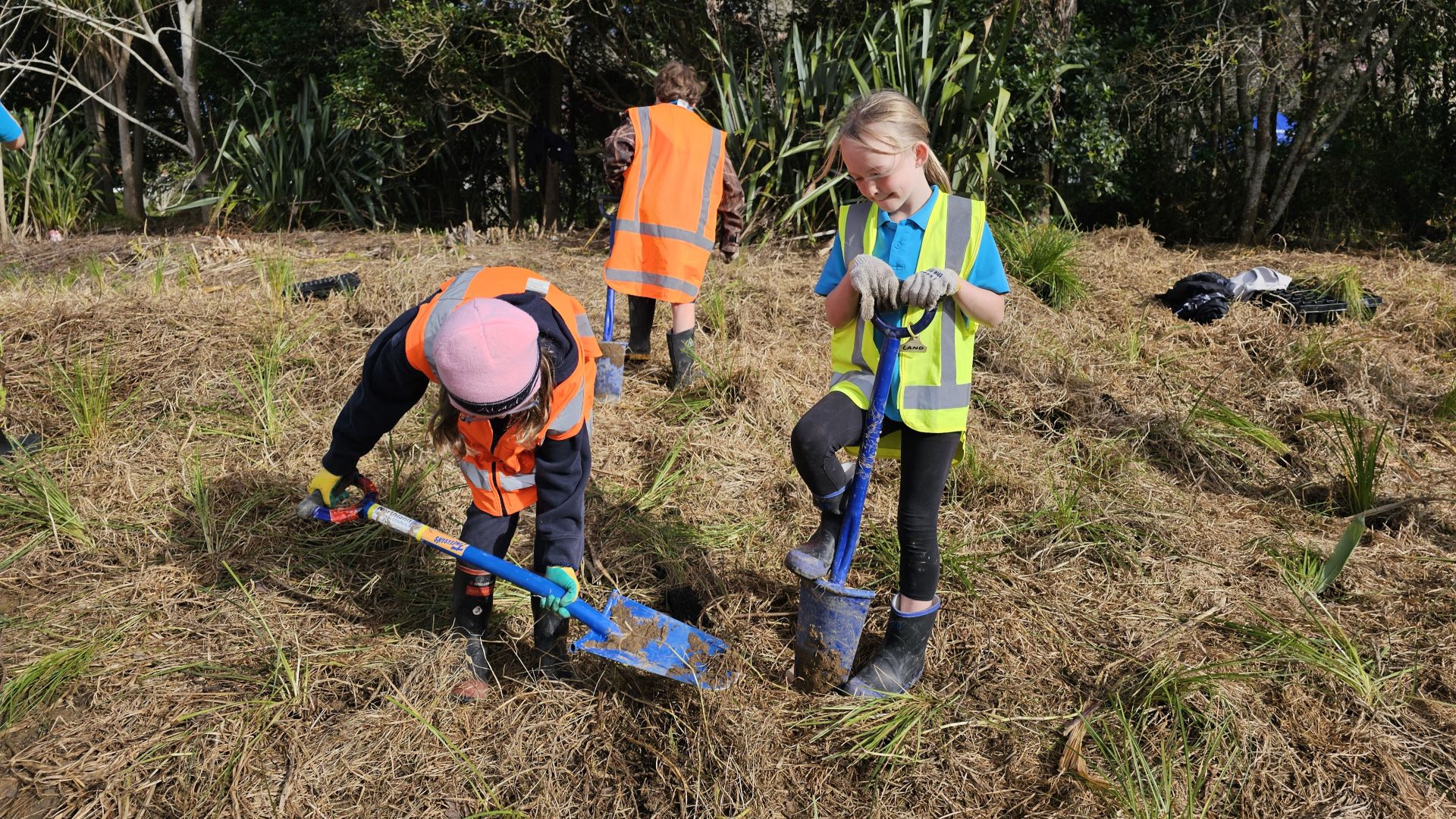
Working alongside NRC’s Biosecurity Specialist – Tiakina Te Taitokerau, Jo Skyrme, students from a Primary Industries class spent time removing invasive species from a site along the awa, preparing the area for future planting.
Focusing on species such as wild ginger and Giant reed, the work helped open the site and create space for restoration, while giving students a direct understanding of the impact their actions can have.
Jo says this kind of on-the-ground learning is an important part of building connection to place.
“Getting out there and doing the mahi helps taiohi see the difference they can make. It gives them a real sense of ownership and shows how their actions contribute to restoring the health of the awa.”
The learning continues beyond the summit and pest plant removal.
By centring tamariki and taiohi voices and grounding climate learning in local place and lived experience, the wider Waiarohia programme is strengthening confidence, connection and collective responsibility across kura, hapū and community partners.
As their Waiarohia journey unfolds, these ākonga are growing not only in knowledge, but in leadership, connection and the belief that their voices matter.

Working as a team, Whangārei Boys' High ākonga loaded invasive plants for removal, supporting hands-on restoration work at a section of the Waiarohia.
Waiarohia Stream Community Event - River life by night.
The Waiarohia kaupapa continues to bring people together through learning, action and connection to place.
Next on the calendar is Waiarohia Spotlighting: River Life by Night, a free community event inviting whānau to experience the awa in a new way. Hosted by the Mountains to Sea Conservation Trust and partners, the evening will showcase restoration work led by local schools and community groups while offering guided walks, hands-on activities and opportunities to discover the rich biodiversity of the Waiarohia after dark.
WDC Reserve after Whangārei Boys' High School entrance SH1 southbound lane
Friday 21 August
5:30 PM - 9 PM