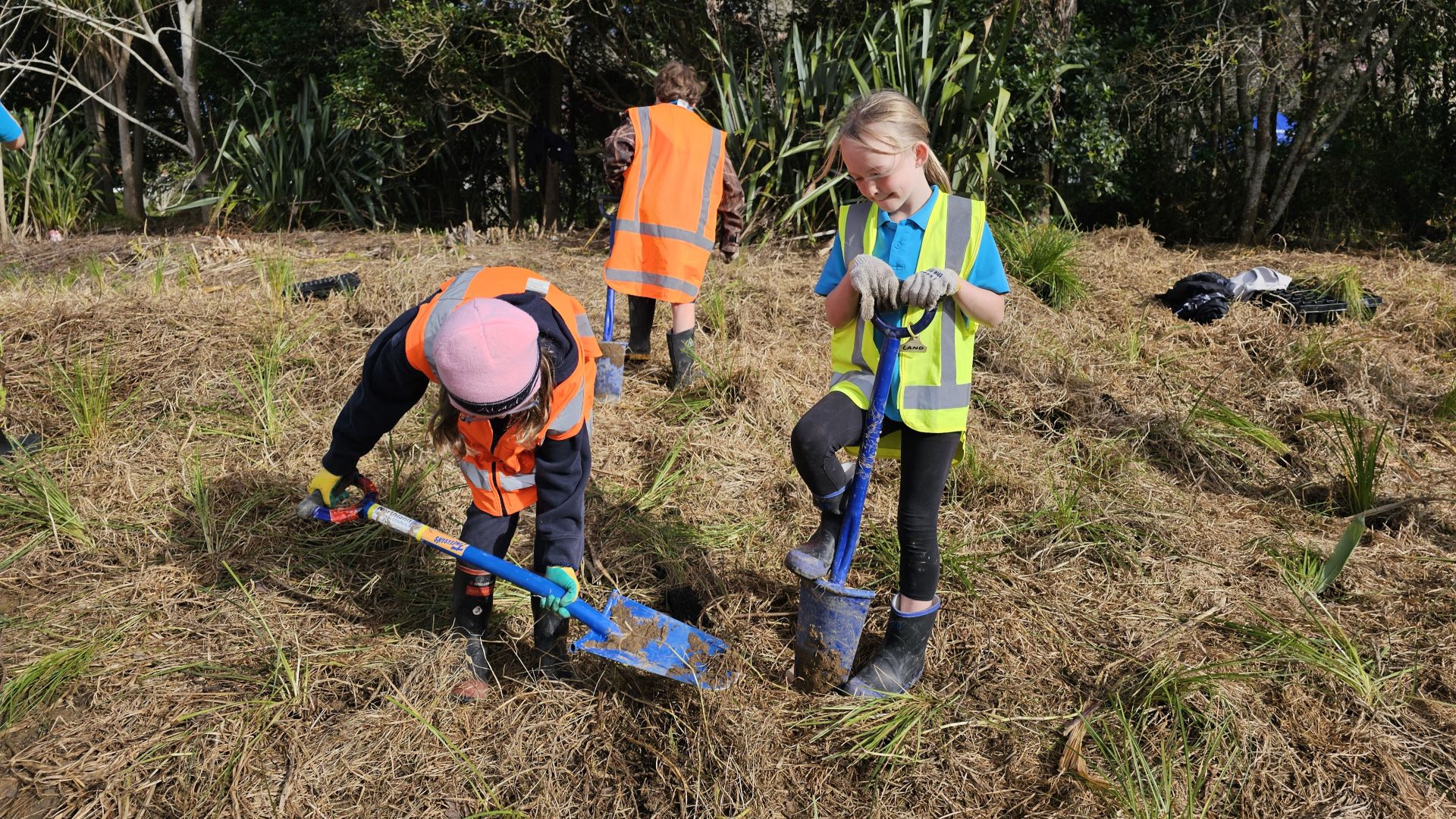


What starts with a planting day can grow into something much bigger. Across Whangārei, schools are adopting sections of coastline, helping to restore fragile dune ecosystems and build lasting connections with the taiao.
Students’ stake in dune care grows over time
From Uretiti to Ruakākā, Ngunguru to Ocean Beach, tamariki are stepping into the role of kaitiaki by ‘adopting a dune’.
In some communities, this connection has been growing for many years. Ngunguru School, for example, has long been involved in caring for local dune environments and reserve areas, helping demonstrate the value of returning to the same site over time.
What began as seasonal winter planting has evolved beyond annual events. Some schools are now returning to the same sites throughout the year, helping to maintain the areas they have planted while building a stronger connection with their local environment.
Working alongside Coastcare and Enviroschools, schools and communities are planting native dune species, learning about biodiversity and helping protect some of Northland’s most vulnerable coastal environments.
This deeper connection gives students opportunities to expand their learning and take part in planting, litter monitoring and installing signage to support the health of their ‘adopted dune’.
"When students return to the same dune site over time, they begin to see how their actions make a difference. Plants establish, weeds reduce, habitats improve and the place becomes somewhere they know, understand and feel responsible for.
That repeated connection helps turn a one-off learning experience into long-term kaitiakitanga" says Coastcare Biodiversity Advisor Brooke Gray.

Whangārei Adventist Christian School ākonga locate native and exotic plants on their dune with a scavenger hunt.
Growing a connection at Uretiti
Whangārei Adventist Christian School has been caring for a section of dunes at Uretiti Beach since 2025.
What began with planting spinifex and pīngao has grown into an ongoing restoration journey. Students have learned about native and pest species, monitored tracking tunnels, identified footprints, carried out bird counts and helped maintain their site through replanting and beach clean-ups.
During a recent visit, tamariki were excited to see how well their earlier plantings were thriving, a visible reminder that their efforts are making a difference.
The school's growing knowledge was also on display during the Explore and Restore Bream Bay Coastal Care field trip, where students shared their restoration journey with Coastcare volunteers and community members from across the rohe.
Learning through action at Ruakākā Beach
At Ruakākā School, students have adopted a section of coastline near the Te Kamo Street entrance to Ruakākā Beach.
Working alongside Coastcare and Enviroschools, ākonga have removed invasive ice plant, planted native spinifex and pīngao, and taken part in scavenger hunts to identify native and exotic dune species.
The hands-on learning has helped students better understand how dunes protect coastlines and provide important habitat for native wildlife.
What started as a day at the beach has become ongoing mahi, with students returning to the site as part of their commitment to restoring and caring for their local environment.

Working together, Ruakākā school ākonga remove ice plant from their adopted dune, practising their hands-on skills.
Discovering what lives in the dunes
Parua Bay School's Envirogroup has taken a different approach at its adopted dune area at Ocean Beach.
As part of the dune restoration project led by Coastcare, Enviroschools and Bream Head Conservation Trust, students have been exploring the species that call dune ecosystems home.
They've learned how tracking tunnels help identify native and pest species, explored trap lines and discovered more about animals such as skinks, geckos, wētā and huhu beetles. They also had the opportunity to share their learning at the Whangārei Coastal Conversations event, highlighting the value of healthy dune ecosystems and ongoing restoration efforts.
The group has spent time collecting seeds and planting in the nursery, building knowledge they can apply when investigating biodiversity in their own adopted dune area.
Their experiences are helping bring science, conservation and kaitiakitanga together in a meaningful and hands-on way.

Parua Bay students check tracking tunnels at Ocean Beach, learning about the different species on their adopted dune.
More than planting
Adopted dunes are creating rich learning opportunities for tamariki while helping protect coastal environments for the future.
Each school’s journey is different, but common themes are emerging. Students are learning to identify native and exotic species, monitor biodiversity, restore habitats and understand how coastal ecosystems function.
Coastcare and Enviroschools continue to support schools through planting events, restoration projects and environmental learning opportunities. Schools interested in developing similar initiatives can connect with the teams for advice, resources and guidance to support local dune restoration and education activities.
From planting spinifex and pīngao to investigating dune wildlife and tracking environmental change, tamariki are discovering that caring for the coast is not a one-off event, but an ongoing commitment.
Adopt a Dune shows what is possible when young people are empowered as kaitiaki, helping restore Northland’s coastlines one dune at a time.